Content removal targeting journalists and news organizations in India has escalated into a pattern with measurable scale. According to the Software Freedom Law Centre (SFLC), a Delhi-based digital rights organization, there were 40 documented instances in 2026 of content takedowns and account blocking affecting journalists or media outlets - and the group cautions that the real figure is likely higher than what official records capture.
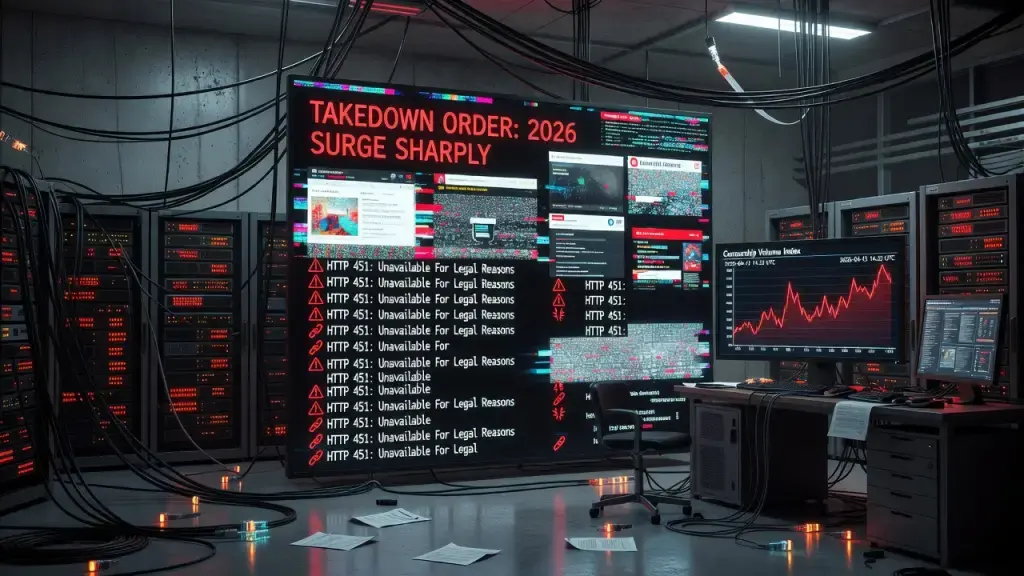
The scope of the broader removal regime is striking. Across all categories of content, not limited to journalism, Indian authorities issued close to 200,000 takedown orders, according to data reviewed by the Indian Express. These orders moved through the government's Sahyog portal, a centralized mechanism for transmitting content removal requests to online platforms, between March and July 2026 alone. For comparison, only 2,312 such orders were recorded between October 2024 and October 2025, a gap that readers tracking platform governance and digital rights can examine further via this source. The jump represents nearly an eightyfold increase in volume over a matter of months, a shift so abrupt that it raises questions about process, oversight, and the criteria used to justify each order. via this source
How a Takedown Portal Reshapes Platform Compliance
Sahyog functions as a single-window system through which government agencies can request that intermediaries - social media platforms, hosting providers, and other online services - remove or restrict specific content. Platforms that resist compliance risk losing legal protections under India's intermediary liability framework, which shields them from being held responsible for user-generated content so long as they act on lawful government directives. That incentive structure means most requests are acted upon quickly, often without the kind of judicial review that would accompany a formal court order. Critics argue this compresses due process into an administrative formality, leaving little room for affected journalists or publishers to contest a removal before it takes effect.
Why Journalists Face Disproportionate Exposure
Reporters and independent news outlets are especially vulnerable in this system because their work often touches on subjects - government policy, communal tensions, security operations - that authorities classify as sensitive. A single flagged article or social media post can trigger an order affecting an entire account, not just the specific content in question, meaning an outlet's full archive and audience reach can disappear during a dispute. SFLC's own acknowledgment that documented cases likely undercount the true scale points to a structural problem: many takedowns are never publicly disclosed, logged inconsistently, or buried within bulk orders covering unrelated material, making independent verification difficult even for researchers with direct portal access.
What the Numbers Signal for Press Freedom
The scale of the increase - from roughly two thousand orders annually to nearly two hundred thousand within a five-month window - suggests either a dramatic escalation in what authorities consider actionable content or a lowering of the threshold required to issue a removal request. Either explanation carries consequences for how freely journalists can report, archive, and distribute information online in India. Press freedom organizations including RSF have flagged this trend as part of a wider global pattern in which administrative takedown mechanisms, rather than courts, increasingly determine what remains visible on the internet, with limited transparency about appeals or outcomes.