Three little pigs, a Greek pantheon, and a reel set that pays out on cascading wins - that combination sounds like a fever dream, yet it works better than most themed slots manage. The mash-up of fairy-tale characters with mythological trappings has become a small trend in online gaming, and this particular title has carved out a loyal following for reasons that go beyond novelty.
What makes the game worth a closer look is how it balances familiar mechanics with a few genuine surprises in bonus structure and volatility. Anyone comparing notes before committing real money will want context on both the original release and its sequel, since the differences between them affect payout expectations and session length. For a detailed breakdown of the follow-up title, the 3 pigs of olympus 2 review covers the mechanical shifts in far more depth than a passing glance at the paytable would reveal. That distinction matters because players often assume a sequel is just a reskin, and in this case that assumption would be wrong.
This piece walks through the original slot's mechanics, its visual and thematic identity, how the sequel changes the formula, and what practical considerations should guide a decision to play either version.
What Is 3 Pigs of Olympus?
The game takes the well-worn fairy tale of three pigs and their construction choices - straw, sticks, and brick - and drops them into an Olympian setting populated by gods, temples, and thunderbolt symbolism. It's an unusual pairing, but the developers lean into the absurdity rather than trying to make it feel serious.
Origins and Theme Concept
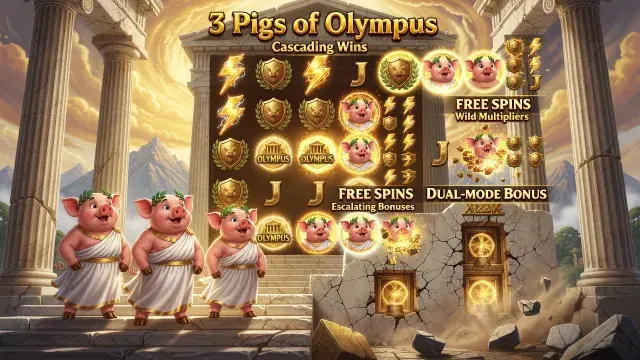
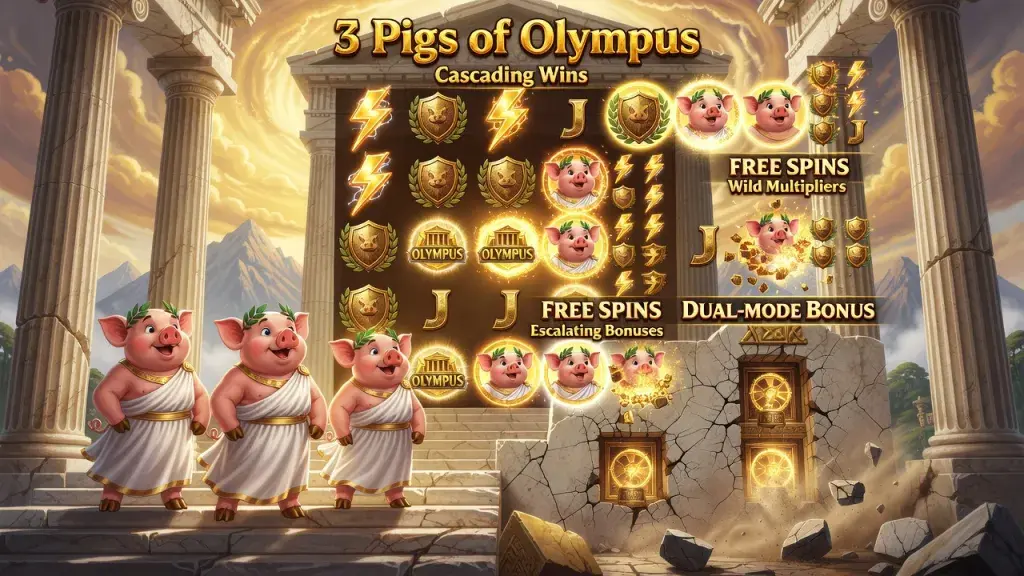
The theme borrows visual cues from classical Greek architecture - columns, laurel wreaths, marble textures - while keeping the pigs as the comedic anchor. This tension between grandeur and silliness is the game's main personality trait, and it's referenced constantly throughout any 3 pigs of olympus game review because it shapes player expectations before a single spin happens.
Developer Background and Release Context
The slot arrived during a period when hybrid-theme games were gaining traction, as studios looked for ways to differentiate titles in a crowded catalog. Rather than relying on a single mythology or fairy tale, blending two recognizable stories gave the game an immediate hook for players scanning lobbies for something different.
Target Audience and Player Expectations
Casual players drawn to whimsical art direction tend to enjoy this title first, but the mechanics underneath are built for people who want more than decoration. The pacing rewards patience, and the bonus triggers are frequent enough to keep low-stakes sessions interesting without demanding a large bankroll.
3 Pigs of Olympus Review: Gameplay Mechanics
Any honest 3 pigs of olympus review has to start with how the reels actually behave, because the theme only carries a game so far. The mechanical foundation here is solid, built around a cluster-pay system rather than traditional paylines.
Reel Structure and Paylines
Instead of fixed lines running left to right, symbols need to form clusters of matching icons to pay out. This structure rewards wider grids and encourages the cascading mechanic described below, since clusters that pay get removed and replaced rather than ending the spin outright.
Symbols, Wilds, and Multipliers
The pigs themselves function as high-value symbols, while Olympian icons - thunderbolts, shields, and temple emblems - fill out the mid and low tiers. Wild symbols appear with attached multipliers that increase as consecutive cascades occur, which is where a lot of the bigger wins originate.
Bonus Rounds and Free Spins
Triggering the bonus round typically requires landing scatter symbols across the grid, after which players receive a set number of free spins with escalating multiplier potential. The free spin round is where the volatility becomes most apparent - a cold sequence for several spins is common before a cascade chain finally lands.
Volatility and RTP Considerations
This is a medium-to-high volatility game. Long dry stretches happen, but so do sudden multiplier stacks that recover losses quickly. Players used to steadier, low-volatility titles may find the swings uncomfortable at first, though the payout ceiling compensates for the wait once a big cascade sequence gets going.
3 Pigs of Olympus Slot: Design, Sound, and User Experience
Mechanics aside, the presentation layer plays a real role in why players keep coming back to the 3 pigs of olympus slot specifically over similarly structured competitors.
Visual Style and Animation Quality
The art direction commits fully to its dual theme - pig characters wear tiny togas, temple backdrops crumble and rebuild during bonus transitions, and cascading wins trigger small comedic animations rather than generic sparkle effects. It's a level of polish that elevates what could have been a throwaway novelty concept.
Soundtrack and Audio Cues
Background music mixes lyre-style instrumentation with playful percussion, shifting to a more triumphant register during bonus rounds. Audio cues for near-misses and multiplier increases are distinct enough that experienced players can often tell what's happening without watching the screen closely.
Mobile Compatibility and Interface
The interface scales cleanly to mobile screens, with control buttons repositioned rather than simply shrunk. Load times stay reasonable even on mid-range devices, which matters for a cluster-pay game where cascade animations need to render smoothly to avoid disrupting the pacing.
Pigs of Olympus 2 Gameplay: What Changed?
The sequel doesn't just add a coat of paint. Several structural decisions separate it clearly from the original, and understanding pigs of olympus 2 gameplay requires looking at what the developers chose to keep versus rebuild.
New Features Introduced in the Sequel
The second installment introduces a persistent multiplier meter that carries value across multiple spins rather than resetting after each cascade sequence ends. This single change alters the entire rhythm of play, rewarding extended sessions in a way the original never did.
Comparing Bonus Structures Between the Two Games
Where the original relied on a single free-spin bonus with escalating multipliers, the sequel splits bonus content into two distinct modes - one favoring frequent smaller wins, the other favoring rarer high-multiplier events. Players can typically choose which mode to enter once the trigger condition is met, giving more control over risk exposure.
- Original: single bonus mode, multiplier resets per free spin round
- Sequel: dual bonus modes, persistent multiplier meter across spins
- Sequel: higher maximum multiplier ceiling during peak bonus stacking
Visual and Thematic Updates
Character designs received noticeably more detail, and the temple backdrop now reacts dynamically to multiplier growth, cracking and rebuilding in real time. The tonal shift is subtle but consistent - slightly less slapstick, slightly more spectacle.
Pigs of Olympus 2 Review: Is It Worth Playing?
A fair pigs of olympus 2 review has to weigh whether the added complexity actually improves the experience or just adds friction for players who preferred the original's simplicity.
Pros and Cons Compared to the Original
The persistent multiplier system rewards patience and produces more dramatic peak wins, but it also means early spins in a session can feel less rewarding since the meter starts at its base value. Players chasing quick, frequent payouts might find the original's structure more satisfying for shorter sessions.
Player Feedback and Community Reception
Community discussion around the sequel tends to split along volatility preference lines. Players who enjoyed the original's steadier bonus frequency sometimes find the sequel's dual-mode system overwhelming at first, while those seeking bigger ceiling payouts generally rate the sequel higher.
Recommended Betting Strategies
Given the persistent multiplier mechanic, extending session length at a lower base bet tends to produce better results than short, high-stake bursts. Building the multiplier meter gradually before increasing bet size once bonus triggers become more frequent is a reasonable approach for managing bankroll while still chasing the higher ceiling.
Final Verdict: 3 Pigs of Olympus Game Review Summary
Both games succeed at what they set out to do, though for slightly different audiences. The original remains the better entry point for players who want approachable volatility and a shorter learning curve, while the sequel rewards those willing to sit through slower build-up phases in exchange for bigger multiplier payoffs.
Who Should Play the Original vs. the Sequel
Newer players or those with smaller bankrolls generally get more consistent entertainment from the original. Experienced slot players who enjoy tracking multiplier progression and don't mind longer dry spells will likely prefer the sequel's structure.
Overall Rating and Key Takeaways
Judged purely on mechanics, presentation, and replay value, this pairing stands above most theme-driven slot releases. The humor never undercuts the mechanical depth, and the sequel's changes feel purposeful rather than cosmetic - a rare outcome for follow-up titles in this genre.
Frequently Asked Questions
Is 3 Pigs of Olympus suitable for beginners?
Yes, the original title's single bonus mode and moderate volatility make it approachable for players new to cluster-pay slots. The rules are easy to grasp within a few spins, and the multiplier system doesn't require tracking multiple meters at once.
What is the main difference in volatility between the two games?
The original has moderate-to-high volatility with resets after each bonus round, while the sequel introduces a persistent multiplier that increases variance further, since larger payouts often depend on sustained play rather than isolated lucky spins.
Do I need to play the original before trying the sequel?
No, the sequel functions as a standalone game and doesn't require prior knowledge of the original's mechanics. That said, understanding the original's simpler bonus structure makes it easier to appreciate what the sequel's dual-mode system adds.
Which version has better maximum win potential?
The sequel generally offers a higher payout ceiling due to its persistent multiplier meter, which can stack to larger values across an extended bonus sequence compared to the original's per-round reset system.
Are the bonus rounds frequent enough for casual play sessions?
In the original, bonus triggers occur often enough to keep short sessions engaging. The sequel's dual-mode system means one mode favors frequency while the other favors rarity, so casual players should choose the mode that emphasizes smaller, more frequent wins.
Does the mobile version offer the same experience as desktop?
Both games translate well to mobile devices, with animations and cascade sequences rendering smoothly on most modern phones. Control layouts are adapted rather than simply scaled down, which keeps the interface usable during fast-paced bonus rounds.